Dillon Quick-Check Provides Accuracy
and Speed when Installing Cable
Barrier Systems
As a leading provider of high-tension cable barrier
systems, Gibraltar Cable Barrier Systems, L.P requires
a quick, reliable and above all accurate method of
checking the tension on the cables they supply. The
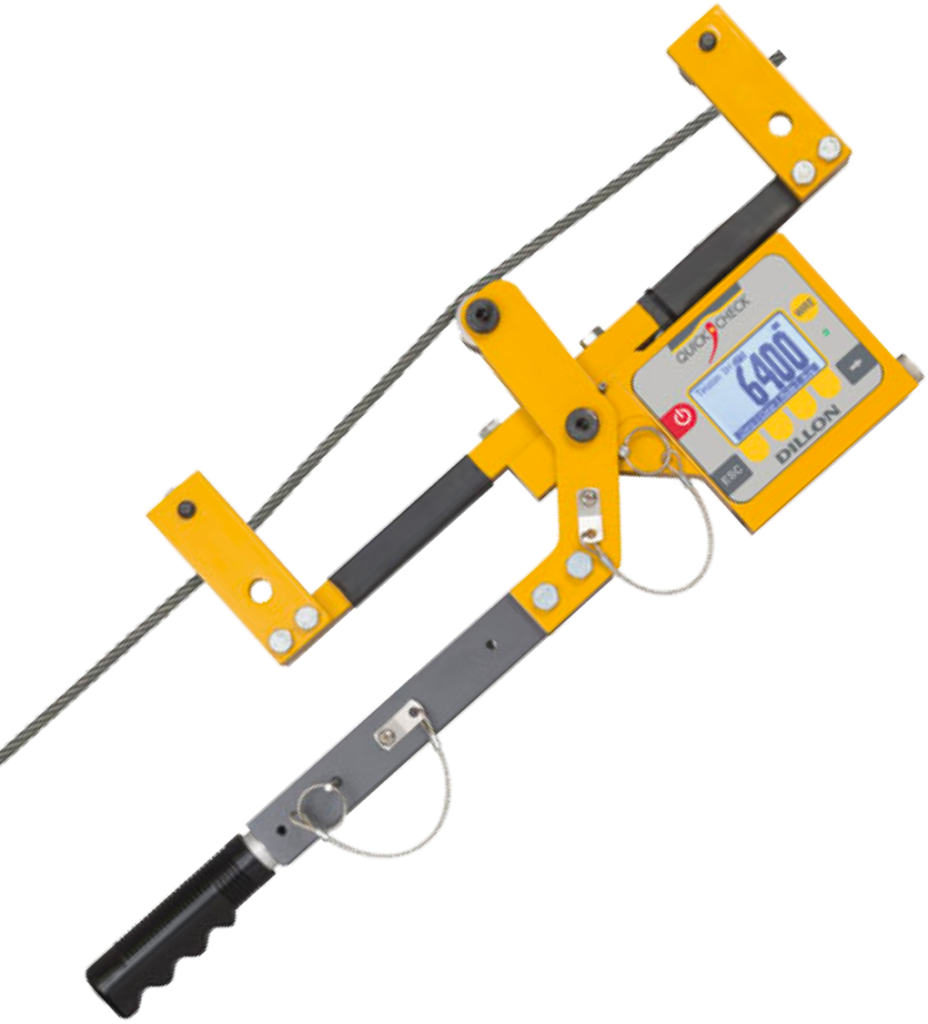
aptly named Quick-Check tension meter from Dillon
does just that, providing assurance that the systems
designed to contain and re-direct vehicles from road
hazards are properly tensioned at all times.
Since 2005 Gibraltar has supplied over 13 million linear
feet of cable in North America alone, which equates
to 45 million feet of cables that are currently being
monitored and tensioned using Dillon Quick-Check
tension meters each year. Jay Winn, Technical Specialist
at Gibraltar said "We have always recommended a
Dillon Quick-Check because the product is so good
and simple to use".
Cable Barriers are erected to prevent a vehicle that
leaves the road from heading into oncoming traffic
or hitting other fixed objects or terrains along the
roadside. The barriers absorb the impact via the cable
system either stopping the vehicle or redirecting it
post-impact. It is crucial that the cables are at the
correct tension in order to take the force of the impact
and assure performance.
Click here to read the full case study

Minnesota Elevator Reduces Hours-Long Service Visit
to Just Minutes with Dillon Quick Balance Tension Meter
Minnesota Elevator, Inc. (MEI), based in Mankato, Minnesota,
has nearly four decades of experience in designing, manufacturing
and servicing elevators for both commercial and
industrial installations. The company specializes in custom
elevator designs/manufacturing, as well as maintenance
and modernizations for a variety of customers including
property management companies, schools, hospitals and
other institutions to support infrastructure expansions,
meet new building codes or to help them solve any of their
vertical transportation needs.
In addition to these projects, the company maintains and
services numerous traction elevators annually to ensure
each operates properly and wire rope tension is well balanced.
This process used to be an arduous task for elevator
service technicians.
"Each elevator car is suspended by anywhere from three to
10 wire ropes, and each wire rope must bear an equal load,"
said Ron Romnes, Vice-President of Field Operations at MEI.
"If one wire rope is doing more work than the others, it
causes irregular wear, as well as a more inconsistent ride for
customers."
Click here to read the full case study

|